Kashmir, often referred to as “Paradise on Earth,” is not only known for its breathtaking landscapes but also for its rich tradition of handicrafts. The region’s craftsmanship has been renowned for centuries, deeply rooted in cultural heritage and influenced by Persian, Mughal, and Central Asian artistry.

1. Pashmina – The Art of Fine Wool Weaving
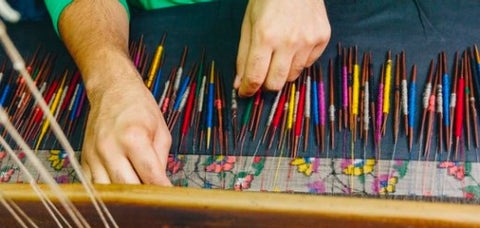
One of Kashmir’s most prized handicrafts is Pashmina, a luxurious wool derived from the undercoat of the Changthangi goat found in Ladakh. The art of Pashmina weaving was introduced by Sultan Zain-ul-Abidin (1420-1470), who brought skilled artisans from Central Asia to Kashmir. These soft, warm shawls became immensely popular among Mughal emperors and European elites. Even today, Pashmina remains a symbol of elegance and Kashmiri craftsmanship.
2. Kashmiri Carpets – The Legacy of Persian Influence
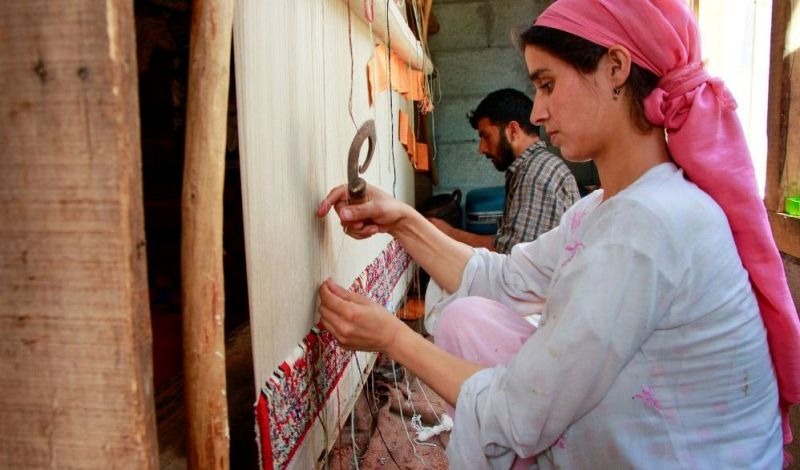
Kashmiri carpets, known for their intricate hand-knotted designs, date back to the Mughal era when Emperor Akbar (1556-1605) invited Persian artisans to Kashmir. Made from high-quality silk or wool, these carpets are distinguished by their elaborate floral and paisley motifs. The hand-knotting technique makes each carpet unique, requiring months or even years to complete.
3. Papier-Mâché – A Blend of Art and Storytelling
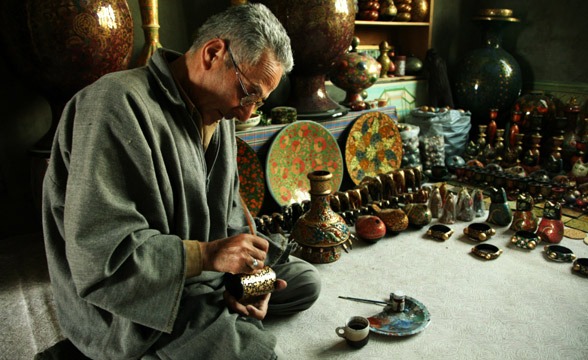
The craft of Papier-Mâché was introduced to Kashmir by Persian artisans during the 14th century. It involves transforming waste paper into beautifully painted decorative objects, often adorned with motifs of chinar leaves, birds, and flowers. Initially favored by the royal court, today, it is a vital part of Kashmir’s handicraft industry.
4. Kashmiri Embroidery – The Magic of Needlework
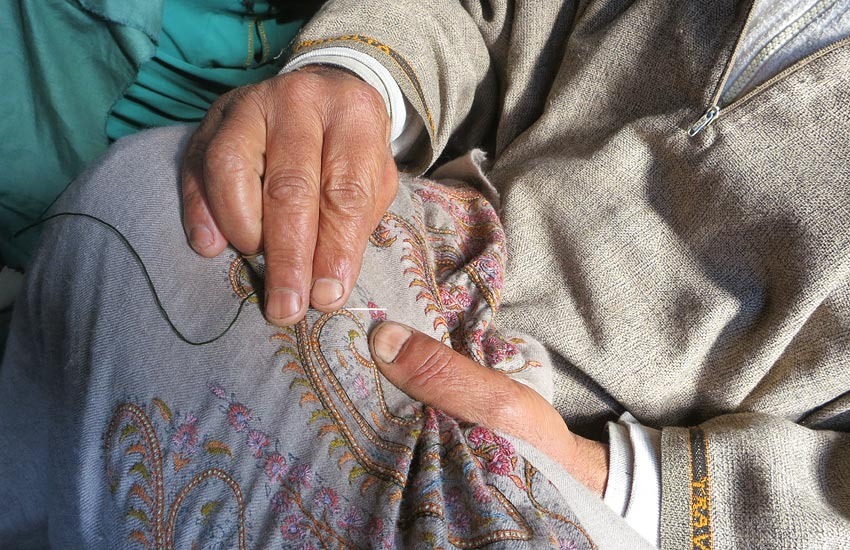
The fine embroidery work of Kashmir, including Sozni, Aari, and Tilla embroidery, is famous for adorning shawls, pherans (traditional cloaks), and garments. Sozni embroidery, often seen on Pashmina shawls, is done with a needle to create delicate floral patterns. Aari embroidery, on the other hand, uses a hooked needle to craft elaborate designs on woolen and cotton fabrics.
5. Walnut Wood Carving – The Craft of Elegance
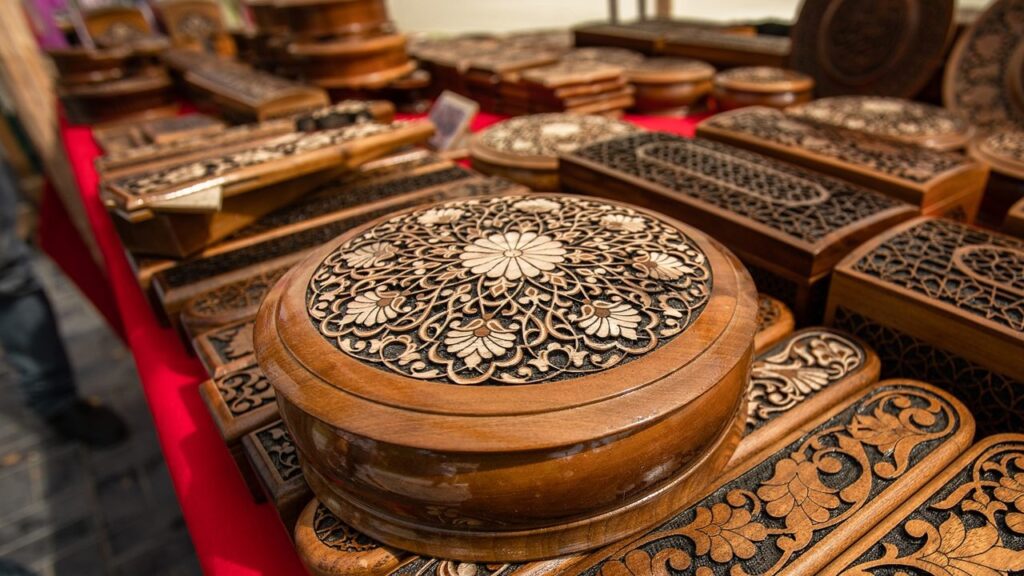
Kashmir is home to some of the finest walnut wood carving in the world. Introduced by Persian artisans, this art flourished under Mughal patronage. Skilled craftsmen create exquisite furniture, decorative boxes, and panels with intricate floral and geometric carvings, making each piece a collector’s delight.
6. Kani Shawls – A Royal Heritage
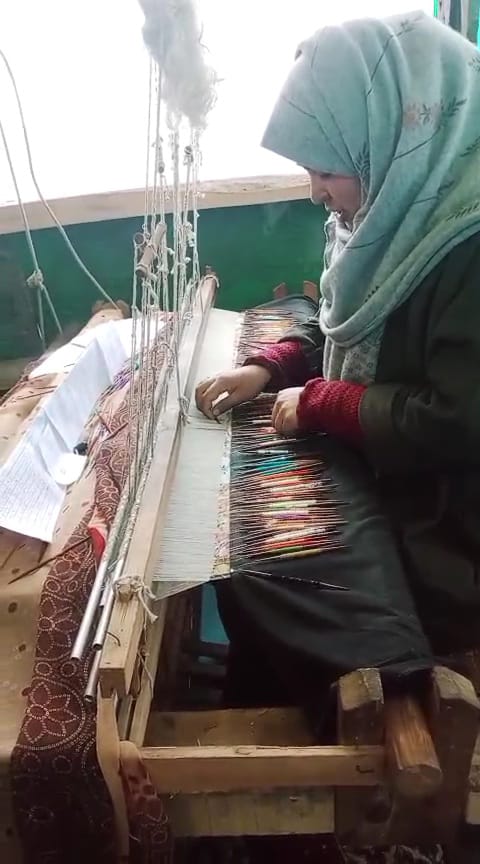
One of the most exquisite and labor-intensive handicrafts of Kashmir is the Kani shawl, woven using small wooden sticks called “kanis.” The tradition dates back over 500 years, with references found in Mughal-era paintings. These shawls feature detailed floral and paisley motifs and are often gifted as luxurious heirlooms.
Preserving Kashmir’s Handicraft Legacy
Despite their global recognition, Kashmiri handicrafts face challenges due to mass production and imitation. However, artisans continue to uphold their centuries-old traditions, ensuring that these crafts remain an integral part of Kashmir’s cultural identity.
From the majestic Pashmina shawls to the artistic Papier-Mâché, every Kashmiri handicraft tells a story of skill, tradition, and timeless beauty.