Srinagar: As winter’s icy grip envelops the Kashmir Valley, Srinagar’s streets come alive with the rich aroma of Harissa, a beloved traditional dish that has become inseparable from the season.

In bustling neighborhoods like Maisuma, popular Harissa shops witness long queues each morning, as locals eagerly await their turn to savor this hearty winter delicacy. Known for its warmth, richness, and comforting flavors, Harissa offers much-needed solace from the biting cold, making it an essential part of the Kashmiri winter experience.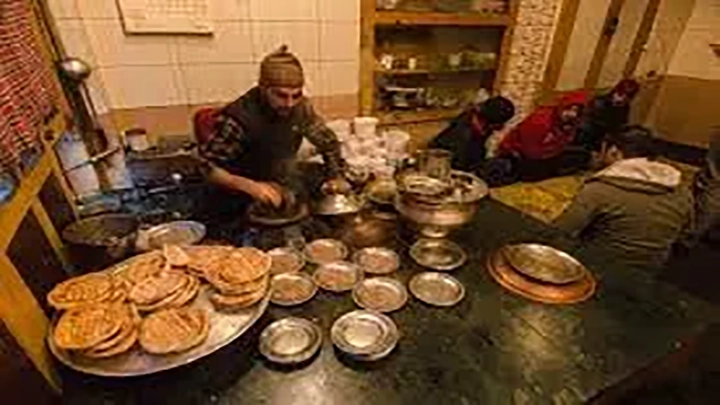
“For us, Harissa is more than just food,” said a loyal customer, reflecting on the dish’s cultural significance. “It’s a tradition, a source of warmth, and a reminder of family gatherings and shared moments. Nothing compares to a steaming plate of Harissa on a freezing morning.”
The demand for Harissa peaks during the winter months, turning its preparation into an art that keeps its makers tirelessly at work. “Its popularity skyrockets in winter, and we barely keep up with the rush,” said Sahil, a local vendor.
Steeped in history, Harissa’s roots trace back centuries, believed to have been introduced by Central Asian traders or invaders, possibly during the Mughal era. Once a delicacy reserved for royals and the elite, it has now become a culinary cornerstone for all. Its preparation involves hours of meticulous effort—slow-cooking mutton, rice, and a medley of spices before pounding them into a smooth, paste-like consistency. This labor-intensive process is key to achieving Harissa’s unique texture and flavor.
Today, Harissa serves not only as a source of nourishment but also as a unifying force, bringing together families, neighbors, and people from diverse backgrounds. “Harissa is not just food—it’s a feeling, a bond that connects us all during these frosty months,” shared a resident of Srinagar’s Downtown area.
Indeed, as the cold deepens, Harissa continues to warm both the body and the soul, cementing its place as an enduring symbol of Kashmir’s winter tradition.