50,000 Migratory Birds Flock To Kashmir’s Wular Lake Till Date This Year: Officials
Bandipora:- In a happy revelation for birders and nature lovers, the Wular Lake Conservation and Management Authority (WCMA) has conducted an initial census showing the arrival of more than 50,000 migratory birds at the famous Wular Lake in north Kashmir Bandipora district.

Bird counts were carried out by the dedicated WCMA team, which diligently documented the presence of over 20 diverse avian species. Notable sightings included Common Pochards, Ruddy Shelducks, Greylag Geese, and a myriad of other fascinating species.
Wular Lake has emerged as a thriving habitat for migratory birds, enchanting birders and nature lovers Officials of Walur conservation management authority said that CCTV cameras have been installed this year on the Wular Lake Banks to stop anti-poaching in the lake.

Adding that this proactive measure aims to deter anti-poaching activities, ensuring the safety and well-being of the migratory birds that seek solace in the pristine waters. The vigilance provided by these cameras contributes to the overall conservation strategy, fostering an environment where both wildlife and enthusiasts can coexist harmoniously.
To enhance the bird-watching experience, authorities have erected bird watching towers, strategically positioned to offer a spectacular view of the avian activity. These towers not only provide enthusiasts with an immersive experience but also serve as platforms to capture the intricate and beautiful movements of the migratory birds.
The endeavor is not only about conservation but also about fostering a deeper connection between humans and nature.
Every year, migratory birds embark on a remarkable journey from countries such as Syria, Japan, and China to the inviting wetlands of Kashmir during the winter months in Wular Lake, with its vast expanse and rich biodiversity, becomes a seasonal haven for these avian travelers, offering a conducive environment for feeding, breeding, and rest.
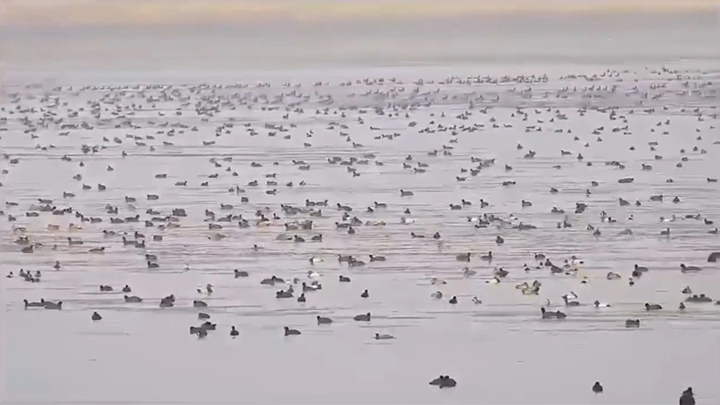
The conservation efforts around Wular Lake go beyond mere documentation,The aim to unravel the intricacies of the breeding life of these migratory birds, providing valuable insights into their behavior, habitat preferences, and the overall impact of climate change on their patterns.
The final composite data from this year’s survey, to be collected by the Wular Lake Conservation and Management Authority (WUCUMA), is anticipated to shed light on these aspects, offering a comprehensive understanding of the delicate balance between the avian visitors and their habitat.
Officials of Wular conservation management authority said that CCTV cameras have been installed this year on Wular banks to stop anti-poaching in the lake.
The significance of Wular Lake extends beyond its role as a sanctuary for migratory birds. It is a testament to the delicate ecological equilibrium that sustains life in the area.
The Walur lake not only supports a diverse range of flora and fauna but also plays a crucial role in maintaining the ecological balance of the entire ecosystem.
As we await the release of the final survey data, the success story of Wular Lake stands as a beacon of hope for conservationists on worldwide, it shows the positive outcomes that can be achieved through collaborative efforts, where government authorities, conservationists, and the local community unite to protect and preserve the natural treasures that define our planet’s biodiversity.
Wular Lake Asia’s largest second fresh water lake in Kashmir Valley stands as a symbol of coexistence, where the serene waters provide a haven for migratory birds, and the conservation efforts ensure the perpetuity of this natural spectacle. As the sun sets over the tranquil lake, it paints a vivid picture of harmony between man and nature, a harmony that must be nurtured and celebrated for generations to come.
The final composite data from this survey is expected to be collected by WUCUMA soon and made available to the public, providing deeper insights into the breeding life of the birds and the importance of Villar Lake to these migratory avian visitors.