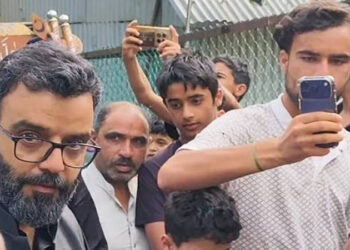
Bandipora: The seasonal migration of Gujjars and Bakarwals begins in the month of May in parts of Kashmir valley, as they trek towards the upper Himalayas with their livestock. Alongside them, seasonal teachers embark on a daunting journey to provide education to children amidst the challenging terrain of dense forests and high peaks.
While the government provides mobile schools for their children’s education, a lack of proper infrastructure poses a significant challenge.
Despite facing challenges, seasonal teachers remain dedicated to their students’ well-being. However, their temporary employment status and meager wages raise concerns about their long-term sustainability.
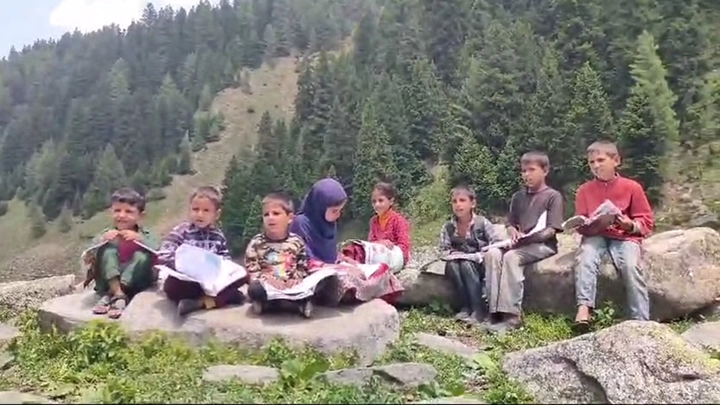

Students, while speaking with the media, said that the government had provided facilities for teachers but that is not enough for them. In times of heavy rain the tents get washed away.
The students demanded government attention towards them in providing them facilities. “We hope the government will think about us also and will provide us basic facilities like boards, waterproof tents so that we can take our education without more suffering,” Auregzab, a student from Rajouri said.
Operating makeshift schools in tents, these educators face heightened risks exacerbated by climate change, including frequent cloud bursts, heavy rainfall, and increased animal attacks in Himalayas. These conditions often damage students’ belongings, such as books and school bags belonging to the Bakarwal community.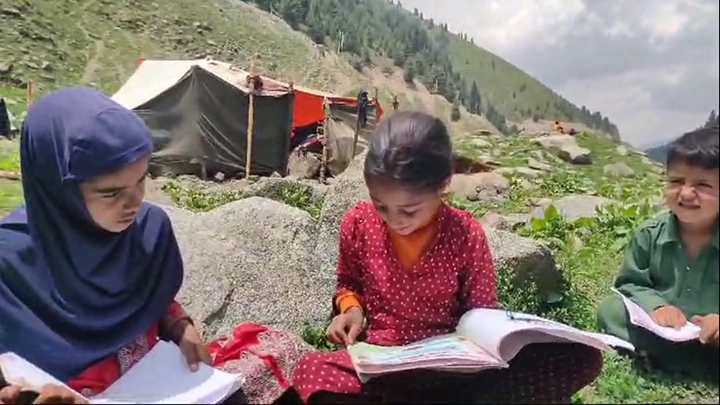
Gujjars and Bakarwals constitute nearly 12% of the population of Jammu and Kashmir region of India. Together, they form the third largest ethnic community in the Union Territory. However, education had been a distant dream for them until the Jammu and Kashmir government set up seasonal education centers under Samagra Shiksha Abhiyan in 2003.
“We remain 24×7 during the seasonal migration with these students despite that the government provides the wages which are less than of a laborer. In government schools teachers earn a salary of fifty-sixty thousands but the government hires us on a temporary basis for six months. After that we again remain unemployed for the rest of months. They did not have any regularization policy for us,” a teacher said.
Another teacher from Rajouri said that they have several times raised their demands in front of the government but nothing positive has happened till date.
“We hope the government will think about us also and make some regularization policies for us,” he said.
Meanwhile Chief Education Officer Bandipora G.M Pujju said that the government is committed to provide basic education to the students of these marginalized communities who travel to upper reaches in summer months.
He also said that recently an assessment was also done by the education department and they are happy after receiving a positive response from students.
“51 volunteer teachers have been hired this year for 581 students who are taking education in these mobile schools,” he added.
He also said that the education department is providing th tents, chairs, tables and accomodation at several places where these teachers can teach these students and take rest.